Не попадитесь на накрученные каналы! Узнайте, не накручивает ли канал просмотры или
подписчиков
Проверить канал на накрутку


Телеграм канал «FX Holding | Official»
#17

FX Holding | Official
427
0
1.1K
558
15.2M
FX Holding — International Investment Holding
🤖 Algorithmic Trading | 🏦 Claims Recovery | 🌍 20+ Countries
🌐 fxholding.com
📱 @fxholdingbot
🎥 youtube.com/@FXHolding
📸 instagram.com/holdingfx
🎵 tiktok.com/@fxholding
🐦 x.com/fxtradeholding
🤖 Algorithmic Trading | 🏦 Claims Recovery | 🌍 20+ Countries
🌐 fxholding.com
📱 @fxholdingbot
🎥 youtube.com/@FXHolding
📸 instagram.com/holdingfx
🎵 tiktok.com/@fxholding
🐦 x.com/fxtradeholding
Подписчики
Всего
5 670 178
Сегодня
-5 823
Просмотров на пост
Всего
41 222
ER
Общий
0.73%
Суточный
0.7%
Динамика публикаций

Telemetr - сервис глубокой аналитики
телеграм-каналов
телеграм-каналов

Получите подробную информацию о каждом канале
Отберите самые эффективные каналы для
рекламных размещений, по приросту подписчиков,
ER, количеству просмотров на пост и другим метрикам
рекламных размещений, по приросту подписчиков,
ER, количеству просмотров на пост и другим метрикам

Анализируйте рекламные посты
и креативы
и креативы
Узнайте какие посты лучше сработали,
а какие хуже, даже если их давно удалили
а какие хуже, даже если их давно удалили

Оценивайте эффективность тематики и контента
Узнайте, какую тематику лучше не рекламировать
на канале, а какая зайдет на ура
на канале, а какая зайдет на ура
Показано 7 из 427 постов
Смотреть все посты
Пост от 18.10.2026 20:00
1 306
0
1
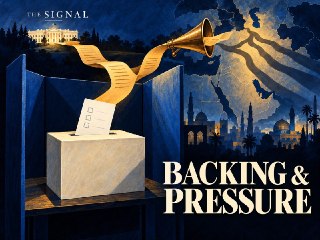
An endorsement with a warning
Donald Trump has backed Benjamin Netanyahu for reelection, nine days before Israel's Oct 27 vote. AP reports he had withheld an endorsement for months.
In his statement, Trump said America might have to deal with Iran on its own if Israelis chose another leader, adding that he was not inclined to do so. Netanyahu thanked him and republished the message.
That gives Netanyahu's campaign a fresh display of presidential backing. It also puts Trump's willingness to act against Iran into the election argument.
The statement gives no specific timetable or operational details. Whether the endorsement changes votes remains uncertain.
TON giveaway: $100 total, 10 winners. Follow @thesignal24 and like + comment on every X news post through Oct 30.
Donald Trump has backed Benjamin Netanyahu for reelection, nine days before Israel's Oct 27 vote. AP reports he had withheld an endorsement for months.
In his statement, Trump said America might have to deal with Iran on its own if Israelis chose another leader, adding that he was not inclined to do so. Netanyahu thanked him and republished the message.
That gives Netanyahu's campaign a fresh display of presidential backing. It also puts Trump's willingness to act against Iran into the election argument.
The statement gives no specific timetable or operational details. Whether the endorsement changes votes remains uncertain.
TON giveaway: $100 total, 10 winners. Follow @thesignal24 and like + comment on every X news post through Oct 30.
❤
153
🔥
151
🎉
108
Пост от 18.10.2026 16:00
2 852
0
1
Solar know-how hits a border
Building a solar factory abroad could become harder: China has proposed export bans or restrictions on 12 photovoltaic technologies, covering polysilicon, wafers and cells.
The commerce ministry's Friday notice opens consultation through Nov 15. The proposed new bans are not final, but pre-export registration for listed technology transfers already applies, including overseas licensing and transfers begun but unfinished.
The ministry says products made using those technologies are outside the scope. Certain key equipment carrying the know-how is covered.
For overseas factory projects, access to the manufacturing process becomes a separate question from access to finished panels.
TON giveaway: $100 total, 10 winners. Follow @thesignal24 and like + comment on every X news post through Oct 30.
Building a solar factory abroad could become harder: China has proposed export bans or restrictions on 12 photovoltaic technologies, covering polysilicon, wafers and cells.
The commerce ministry's Friday notice opens consultation through Nov 15. The proposed new bans are not final, but pre-export registration for listed technology transfers already applies, including overseas licensing and transfers begun but unfinished.
The ministry says products made using those technologies are outside the scope. Certain key equipment carrying the know-how is covered.
For overseas factory projects, access to the manufacturing process becomes a separate question from access to finished panels.
TON giveaway: $100 total, 10 winners. Follow @thesignal24 and like + comment on every X news post through Oct 30.

❤
130
🎉
130
🔥
110
Пост от 18.10.2026 12:00
19 985
0
2
The cards come with a toll
Yuga Labs has opened Mudwater pack claims for eligible Bored Ape and Mutant Ape holders. The digital collection runs on Solana: 10 packs per Bored Ape, two per Mutant Ape.
Trading has two charges. The site lists a 2.5% royalty plus a 2.5% "reflection" used to buy APE for holders in proportion to their holdings. That payout depends on trading activity; it is not a fixed return.
Converting between digital and physical cards, and combining packs into boxes, are both still marked "coming soon".
Otherside's game is live with demo cards. The site says collectors' own onchain cards will be usable later. Claiming a pack and getting the full advertised experience are separate milestones.
TON giveaway: $100 total, 10 winners. Follow @thesignal24 and like + comment on every X news post through Oct 30.
Yuga Labs has opened Mudwater pack claims for eligible Bored Ape and Mutant Ape holders. The digital collection runs on Solana: 10 packs per Bored Ape, two per Mutant Ape.
Trading has two charges. The site lists a 2.5% royalty plus a 2.5% "reflection" used to buy APE for holders in proportion to their holdings. That payout depends on trading activity; it is not a fixed return.
Converting between digital and physical cards, and combining packs into boxes, are both still marked "coming soon".
Otherside's game is live with demo cards. The site says collectors' own onchain cards will be usable later. Claiming a pack and getting the full advertised experience are separate milestones.
TON giveaway: $100 total, 10 winners. Follow @thesignal24 and like + comment on every X news post through Oct 30.

🎉
231
🔥
213
❤
194
Пост от 18.10.2026 08:00
20 300
0
2
Ethereum's next rehearsal
ETH holders need no wallet changes for the next Glamsterdam milestone. It is a testnet upgrade.
The Ethereum Foundation has scheduled Hoodi activation for October 26 at 17:42:48 UTC. Mainnet timing is still undecided.
Hoodi operators must update both execution and consensus clients. Validators also need updated beacon-node and validator software. Nodes that miss the new rules cannot follow the upgraded testnet.
For app builders, the practical test is gas: contracts relying on fixed gas assumptions may need changes. The Foundation says the large majority are unaffected.
Glamsterdam puts the proposer-builder split into the protocol and adds block access lists for parallel validation. These are scaling foundations, not evidence of lower mainnet fees today.
TON giveaway: $100 total, 10 winners. Follow @thesignal24 and like + comment on every X news post through Oct 30.
ETH holders need no wallet changes for the next Glamsterdam milestone. It is a testnet upgrade.
The Ethereum Foundation has scheduled Hoodi activation for October 26 at 17:42:48 UTC. Mainnet timing is still undecided.
Hoodi operators must update both execution and consensus clients. Validators also need updated beacon-node and validator software. Nodes that miss the new rules cannot follow the upgraded testnet.
For app builders, the practical test is gas: contracts relying on fixed gas assumptions may need changes. The Foundation says the large majority are unaffected.
Glamsterdam puts the proposer-builder split into the protocol and adds block access lists for parallel validation. These are scaling foundations, not evidence of lower mainnet fees today.
TON giveaway: $100 total, 10 winners. Follow @thesignal24 and like + comment on every X news post through Oct 30.

❤
297
🎉
189
🔥
157
Пост от 18.10.2026 05:05
45 192
0
2
The world in 24 hours
A wallet deadline, a sanctions pause and a Black Sea interception.
Cobo sets an exit date
Cobo says only its consumer Wallet App is closing; institutional services continue. Withdraw before Dec 1, 00:00 UTC+8. Leftovers face a 2% monthly fee, minimum $100. Balances below $100 can be fully deducted. Update saved receiving addresses.
New sanctions put on hold
Trump waived new Russia sanctions and tariffs under the Graham Act. The order preserves earlier Russia sanctions. Zelenskyy urged support for applying the new measures.
Romania reports a shootdown
Romania says its F-16s shot down two Geran-family attack drones over its Black Sea territorial waters after they entered national airspace. The ministry reported the interceptions on Saturday.
TON giveaway: $100 total, 10 winners. Follow @thesignal24 and like + comment on every X news post through Oct 30.
A wallet deadline, a sanctions pause and a Black Sea interception.
Cobo sets an exit date
Cobo says only its consumer Wallet App is closing; institutional services continue. Withdraw before Dec 1, 00:00 UTC+8. Leftovers face a 2% monthly fee, minimum $100. Balances below $100 can be fully deducted. Update saved receiving addresses.
New sanctions put on hold
Trump waived new Russia sanctions and tariffs under the Graham Act. The order preserves earlier Russia sanctions. Zelenskyy urged support for applying the new measures.
Romania reports a shootdown
Romania says its F-16s shot down two Geran-family attack drones over its Black Sea territorial waters after they entered national airspace. The ministry reported the interceptions on Saturday.
TON giveaway: $100 total, 10 winners. Follow @thesignal24 and like + comment on every X news post through Oct 30.

🔥
123
🎉
121
❤
108
Пост от 17.10.2026 20:02
1 972
0
1
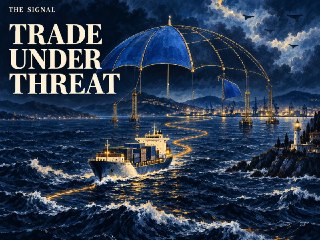
A shipping lane needs a shield
Bulgaria has asked NATO for combat and patrol aircraft, air-defence systems and anti-drone systems after attacks on commercial ships in the Black Sea, Defence Minister Dimitar Stoyanov says.
Speaking on Friday, he said the support package was still unconfirmed. A NATO official told Reuters that alliance ambassadors would discuss the request next week.
Stoyanov also wants a common approach with Romania and Turkey. The three countries' defence ministers have already discussed stronger surveillance and intelligence sharing, according to Bulgaria's ministry.
For crews and shipowners, the detail that matters is which protection arrives and when. Stoyanov warned that even additional allied forces could not guarantee complete security at sea.
TON giveaway: $100 total, 10 winners. Follow @thesignal24 and like + comment on every X news post through Oct 30.
Bulgaria has asked NATO for combat and patrol aircraft, air-defence systems and anti-drone systems after attacks on commercial ships in the Black Sea, Defence Minister Dimitar Stoyanov says.
Speaking on Friday, he said the support package was still unconfirmed. A NATO official told Reuters that alliance ambassadors would discuss the request next week.
Stoyanov also wants a common approach with Romania and Turkey. The three countries' defence ministers have already discussed stronger surveillance and intelligence sharing, according to Bulgaria's ministry.
For crews and shipowners, the detail that matters is which protection arrives and when. Stoyanov warned that even additional allied forces could not guarantee complete security at sea.
TON giveaway: $100 total, 10 winners. Follow @thesignal24 and like + comment on every X news post through Oct 30.
🔥
282
❤
199
🎉
164
Пост от 17.10.2026 16:04
309
0
1
Your account has a border
Bitget's updated English terms now list Russia, Belarus and Thailand among prohibited jurisdictions. Its older Russian translation omits them; the English text takes precedence.
The exchange says it is ending service for certain users while continuing to operate. Affected customers will receive notices with deadlines and withdrawal instructions. It says users without an official notice may continue as usual, subject to its terms.
The practical risk is access: the terms allow account restrictions and forced closure of open positions.
Check your own notice through the official app or Support Center. Bitget's assurance that funds are safe does not promise uninterrupted access.
TON giveaway: $100 total, 10 winners. Follow @thesignal24 and like + comment on every X news post through Oct 30.
Bitget's updated English terms now list Russia, Belarus and Thailand among prohibited jurisdictions. Its older Russian translation omits them; the English text takes precedence.
The exchange says it is ending service for certain users while continuing to operate. Affected customers will receive notices with deadlines and withdrawal instructions. It says users without an official notice may continue as usual, subject to its terms.
The practical risk is access: the terms allow account restrictions and forced closure of open positions.
Check your own notice through the official app or Support Center. Bitget's assurance that funds are safe does not promise uninterrupted access.
TON giveaway: $100 total, 10 winners. Follow @thesignal24 and like + comment on every X news post through Oct 30.