Не попадитесь на накрученные каналы! Узнайте, не накручивает ли канал просмотры или
подписчиков
Проверить канал на накрутку


Телеграм канал «Genshin Impact Extra - Italia 🇮🇹»

Genshin Impact Extra - Italia 🇮🇹
14.0K
232.3K
1.3K
604
100.8K
⭐️ News, meme, guide, bug, suggerimenti e tanto altro su Genshin Impact solo qui!
🇮🇹 Gruppo Pubblico
└ @GenshinImpactIT
📰 Canale News
└ @GenshinImpactNEWS
🌐 Network
└ @HoyoItalia / @ProjektArk
⁉️ Support
└ @ArkSupportBot
🇮🇹 Gruppo Pubblico
└ @GenshinImpactIT
📰 Canale News
└ @GenshinImpactNEWS
🌐 Network
└ @HoyoItalia / @ProjektArk
⁉️ Support
└ @ArkSupportBot
Подписчики
Всего
8 121
Сегодня
+3
Просмотров на пост
Всего
1 702
ER
Общий
20.96%
Суточный
19.28%
Динамика публикаций

Telemetr - сервис глубокой аналитики
телеграм-каналов
телеграм-каналов

Получите подробную информацию о каждом канале
Отберите самые эффективные каналы для
рекламных размещений, по приросту подписчиков,
ER, количеству просмотров на пост и другим метрикам
рекламных размещений, по приросту подписчиков,
ER, количеству просмотров на пост и другим метрикам

Анализируйте рекламные посты
и креативы
и креативы
Узнайте какие посты лучше сработали,
а какие хуже, даже если их давно удалили
а какие хуже, даже если их давно удалили

Оценивайте эффективность тематики и контента
Узнайте, какую тематику лучше не рекламировать
на канале, а какая зайдет на ура
на канале, а какая зайдет на ура
Показано 7 из 14 048 постов
Смотреть все посты
Пост от 25.10.2026 14:55
237
6
4
[G.I. 7.X] SuS info su K.K e la Principessa Andro-Basilisk (Andromeda) | Oltre a qualche dibattito tra i vari leaker
La "Principessa Andro-Basilisk" dell'Impero Andromeda farà il suo debutto in game nella 7.3. Sia lei che Enjou diventeranno giocabili nella prima metà della 7.6. -Sakiko
L'informazione riportata qui non corrisponde propriamente con ciò che so, in più questa persona ha postato anche dei "leak" che non corrispondono pienamente, quindi prendete il tutto con delle pinze minuscole. -UncleDeathCock
Beh, alcuni leak recenti con spoiler della 7.3 non c'entrano con ciò che sappiamo, quindi... vedremo. -HXG
Serie di post fatti da Sakiko:
"Sarò totalmente onesto, credo che il personaggio che viene scambiato per K.K. e per la Principessa Andro-Basilisk sia lo stesso personaggio, mentre il personaggio che viene scambiato solo per uno delle due penso sia un personaggio completamente diverso.
Si, lo so che le persone hanno fatto notare che K.K. e la Principessa Andro-Basilisk sono diverse di aspetto. Ciò nonostante, la mia teoria al momento è che il personaggio che chiamiamo "K.K." in questo momento, non è
K.K., mentre il personaggio che assomiglia a Skirk è una tra K.K. e la Principessa Andro-Basilisk, in altre parole: i leaker potrebbero star usando diversi nomi per lo stesso personaggio, portando così alla confusione.
Giusto per chiarire, non sto dicendo che K.K. e la Principessa Andro-Basilisk siano lo stesso personaggio. Sto solo ipotizzando che i leaker potrebbero star usando diversi nomi per lo stesso personaggio. Alla fine, coloro che sanno di K.K. non sembrano sapere della Principessa Andro-Basilisk e viceversa, e questo potrebbe già spiegare la confusione.
Questa è una mia speculazione totale, visto che niente è confermato. Per favore non citatemi su questo messaggio!"
"C'è anche un leak secondo il quale K.K. sia ispirata a Giovanna d'Arco. Anche se, di fatto, quest'estetica sembra associata anche alla Principessa Andro-Basilisk, entro certi limiti, anche se on completamente"
"Non posteremo più alcun leak su K.K. e la Principessa Andro-Basilisk comunque, fino ad informazioni più concrete, a meno che non siano robe di design, ma credo che ormai abbiate già una mezza idea di come possa essere :)"
Via Sakiko, UncleDeathCock, HXG
𝗦𝗰𝗼𝗽𝗿𝗶 𝗛𝗼𝘆𝗼𝗜𝘁𝗮𝗹𝗶𝗮™
La "Principessa Andro-Basilisk" dell'Impero Andromeda farà il suo debutto in game nella 7.3. Sia lei che Enjou diventeranno giocabili nella prima metà della 7.6. -Sakiko
L'informazione riportata qui non corrisponde propriamente con ciò che so, in più questa persona ha postato anche dei "leak" che non corrispondono pienamente, quindi prendete il tutto con delle pinze minuscole. -UncleDeathCock
Beh, alcuni leak recenti con spoiler della 7.3 non c'entrano con ciò che sappiamo, quindi... vedremo. -HXG
Serie di post fatti da Sakiko:
"Sarò totalmente onesto, credo che il personaggio che viene scambiato per K.K. e per la Principessa Andro-Basilisk sia lo stesso personaggio, mentre il personaggio che viene scambiato solo per uno delle due penso sia un personaggio completamente diverso.
Si, lo so che le persone hanno fatto notare che K.K. e la Principessa Andro-Basilisk sono diverse di aspetto. Ciò nonostante, la mia teoria al momento è che il personaggio che chiamiamo "K.K." in questo momento, non è
K.K., mentre il personaggio che assomiglia a Skirk è una tra K.K. e la Principessa Andro-Basilisk, in altre parole: i leaker potrebbero star usando diversi nomi per lo stesso personaggio, portando così alla confusione.
Giusto per chiarire, non sto dicendo che K.K. e la Principessa Andro-Basilisk siano lo stesso personaggio. Sto solo ipotizzando che i leaker potrebbero star usando diversi nomi per lo stesso personaggio. Alla fine, coloro che sanno di K.K. non sembrano sapere della Principessa Andro-Basilisk e viceversa, e questo potrebbe già spiegare la confusione.
Questa è una mia speculazione totale, visto che niente è confermato. Per favore non citatemi su questo messaggio!"
"C'è anche un leak secondo il quale K.K. sia ispirata a Giovanna d'Arco. Anche se, di fatto, quest'estetica sembra associata anche alla Principessa Andro-Basilisk, entro certi limiti, anche se on completamente"
"Non posteremo più alcun leak su K.K. e la Principessa Andro-Basilisk comunque, fino ad informazioni più concrete, a meno che non siano robe di design, ma credo che ormai abbiate già una mezza idea di come possa essere :)"
Via Sakiko, UncleDeathCock, HXG
𝗦𝗰𝗼𝗽𝗿𝗶 𝗛𝗼𝘆𝗼𝗜𝘁𝗮𝗹𝗶𝗮™
Пост от 23.10.2026 21:03
366
3
12
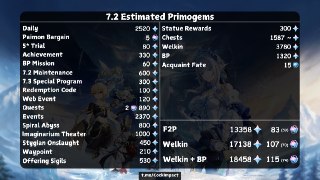
corrected(abyss was accidentally 1600 instead of 800)
👎
5
Пост от 23.10.2026 20:13
699
8
10
[GI 7.3] Current Adjustments to Danica's Kit
Compared to the previous version, the buffs and Quills have been swapped.
ATK:
- Her Elemental Burst (Q) now provides an ATK buff to the entire team at C0 (previously unlocked at C2).
- At C0, she also receives an additional ATK buff exclusive to the active character.
Quills:
- The Quills are now unlocked at C2 (previously available at C0).
Via Sakiko
𝗦𝗰𝗼𝗽𝗿𝗶 𝗛𝗼𝘆𝗼𝗜𝘁𝗮𝗹𝗶𝗮™
Compared to the previous version, the buffs and Quills have been swapped.
ATK:
- Her Elemental Burst (Q) now provides an ATK buff to the entire team at C0 (previously unlocked at C2).
- At C0, she also receives an additional ATK buff exclusive to the active character.
Quills:
- The Quills are now unlocked at C2 (previously available at C0).
Via Sakiko
𝗦𝗰𝗼𝗽𝗿𝗶 𝗛𝗼𝘆𝗼𝗜𝘁𝗮𝗹𝗶𝗮™
Пост от 23.10.2026 19:57
326
5
23
[GI 7.3] Tsaritsa's C0 Support Buffs and Special Main DPS Mechanics
Role: Sub-DPS. She has two modes: an on-field main DPS mode and an off-field support mode, with support capabilities for both Stellar-Conduct and Stellar Swirl teams. The mode can be selected through different actions, somewhat similar to certain dual-mode characters in Genshin Impact. Neither mode compromises the strength of the other.
C0 Support Buffs:
- Off-field Cryo application (Elemental Skill)
- 14% Base DMG Bonus
- 40% Stellar DMG Bonus
- 10% CRIT Rate
She provides specialized buffs for both Stellar Swirl and Stellar-Conduct teams, with Stellar-Conduct specifically accelerating stack accumulation.
Special Mechanics That Benefit Tsaritsa as an On-Field Main DPS:
1. Two Elemental Bursts: She has two Elemental Bursts. Her special Burst accumulates its special resource based on Stellar DMG dealt by the entire team.
2. Automatic Burst Upon Switching In: When Tsaritsa is off-field and her second Elemental Burst is fully charged, switching her onto the field will immediately trigger the second Burst, serving as her entry nuke.
3. Enhanced On-Field Mode: After selecting the on-field mode, Tsaritsa enters an enhanced state. This state lasts long enough for her to complete a full, consistent damage rotation.
During this state, Tsaritsa gains the following effects:
- Her on-field capabilities and main DPS performance are significantly enhanced, with appropriate compensation for her survivability.
- She is forced to remain on-field.
- Teammates cannot be switched onto the field during this period. They can only provide buffs and off-field damage to support Tsaritsa.
- She cannot switch back to her off-field mode during this period.
Via Sakiko
𝗦𝗰𝗼𝗽𝗿𝗶 𝗛𝗼𝘆𝗼𝗜𝘁𝗮𝗹𝗶𝗮™
Role: Sub-DPS. She has two modes: an on-field main DPS mode and an off-field support mode, with support capabilities for both Stellar-Conduct and Stellar Swirl teams. The mode can be selected through different actions, somewhat similar to certain dual-mode characters in Genshin Impact. Neither mode compromises the strength of the other.
C0 Support Buffs:
- Off-field Cryo application (Elemental Skill)
- 14% Base DMG Bonus
- 40% Stellar DMG Bonus
- 10% CRIT Rate
She provides specialized buffs for both Stellar Swirl and Stellar-Conduct teams, with Stellar-Conduct specifically accelerating stack accumulation.
Special Mechanics That Benefit Tsaritsa as an On-Field Main DPS:
1. Two Elemental Bursts: She has two Elemental Bursts. Her special Burst accumulates its special resource based on Stellar DMG dealt by the entire team.
2. Automatic Burst Upon Switching In: When Tsaritsa is off-field and her second Elemental Burst is fully charged, switching her onto the field will immediately trigger the second Burst, serving as her entry nuke.
3. Enhanced On-Field Mode: After selecting the on-field mode, Tsaritsa enters an enhanced state. This state lasts long enough for her to complete a full, consistent damage rotation.
During this state, Tsaritsa gains the following effects:
- Her on-field capabilities and main DPS performance are significantly enhanced, with appropriate compensation for her survivability.
- She is forced to remain on-field.
- Teammates cannot be switched onto the field during this period. They can only provide buffs and off-field damage to support Tsaritsa.
- She cannot switch back to her off-field mode during this period.
Via Sakiko
𝗦𝗰𝗼𝗽𝗿𝗶 𝗛𝗼𝘆𝗼𝗜𝘁𝗮𝗹𝗶𝗮™
👍
2
🤣
1
Пост от 23.10.2026 19:34
563
7
2
Non ci credo... Potrò farmi Amber c1 dopo 6 anni di gioco 😭
🤣
14
❤
1
👎
1
😢
1
Пост от 23.10.2026 18:40
69
2
2
non so se è la vision ma non mi sembra né Anemo né Dendro al momento (magari non ha una vision sul corpo come Skirk o Neuvillette)
Пост от 23.10.2026 18:40
91
1
1
Видео/гифка