Не попадитесь на накрученные каналы! Узнайте, не накручивает ли канал просмотры или
подписчиков
Проверить канал на накрутку


Телеграм канал «Pavel Durov»

Подписчики
Всего
10 359 544
Сегодня
0
Просмотров на пост
Всего
1 068 279
ER
Общий
10.3%
Суточный
6.96%
Динамика публикаций
Telemetr - сервис глубокой аналитики
телеграм-каналов
телеграм-каналов

Получите подробную информацию о каждом канале
Отберите самые эффективные каналы для
рекламных размещений, по приросту подписчиков,
ER, количеству просмотров на пост и другим метрикам
рекламных размещений, по приросту подписчиков,
ER, количеству просмотров на пост и другим метрикам

Анализируйте рекламные посты
и креативы
и креативы
Узнайте какие посты лучше сработали,
а какие хуже, даже если их давно удалили
а какие хуже, даже если их давно удалили

Оценивайте эффективность тематики и контента
Узнайте, какую тематику лучше не рекламировать
на канале, а какая зайдет на ура
на канале, а какая зайдет на ура
Показано 4 из 488 постов
Смотреть все посты
Пост от 11.10.2026 17:52
287 164
0
2 174
✨ Designers × AI
🆕 The mockup era is over. Today’s AI tools give every designer a superpower: you can now craft your ideas, not just draw them.
The gap between “what if…?” and “look, it works!” has never been smaller, and that changed how we build features in Telegram.
Message @designers to submit your concepts.
✔️ We accept
– Working, ready-to-implement code
complemented by
– A demo video of your feature in action
🗑 We no longer accept
– Static mockups
– Demo videos with no code behind them
– Text-only concepts
No coding background? Curiosity, attention to detail and a good prompt will take you far.
The future of design isn’t drawn – it’s built.
🚀 Let's build it together!
(An example of what is possible by our iOS designer – this is a ready to use implementation not a motion video.) 👇
🆕 The mockup era is over. Today’s AI tools give every designer a superpower: you can now craft your ideas, not just draw them.
The gap between “what if…?” and “look, it works!” has never been smaller, and that changed how we build features in Telegram.
Message @designers to submit your concepts.
✔️ We accept
– Working, ready-to-implement code
complemented by
– A demo video of your feature in action
🗑 We no longer accept
– Static mockups
– Demo videos with no code behind them
– Text-only concepts
No coding background? Curiosity, attention to detail and a good prompt will take you far.
The future of design isn’t drawn – it’s built.
🚀 Let's build it together!
(An example of what is possible by our iOS designer – this is a ready to use implementation not a motion video.) 👇
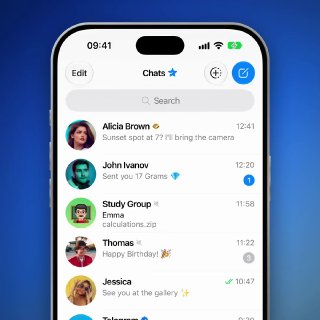
Пост от 10.10.2026 17:22
440 706
0
4 040
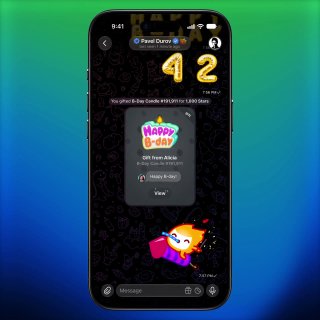
💸 If your wallet doesn’t look like this, don’t even bother sending me money for my birthday! 🎂
Пост от 16.09.2026 21:35
36
0
0
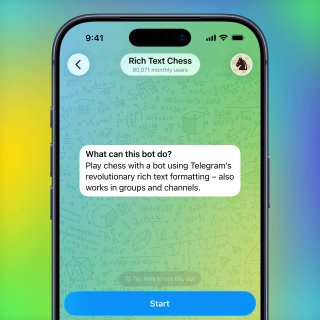
Every Telegram message can now be an app.
🛠 Devs can add buttons that turn a message into a live game, survey, or storefront.
🎮 We vibe-coded this demo app (telemetr.me/RichChessBot) in 15 minutes.
🛠 Devs can add buttons that turn a message into a live game, survey, or storefront.
🎮 We vibe-coded this demo app (telemetr.me/RichChessBot) in 15 minutes.
Пост от 16.09.2026 21:34
1
0
0
Every Telegram message can now be an app.
🛠 Devs can add buttons that turn a message into a live game, survey, or storefront.
🎮 We vibe-coded this demo app (telemetr.me/RichChessBot) in 15 minutes.
🛠 Devs can add buttons that turn a message into a live game, survey, or storefront.
🎮 We vibe-coded this demo app (telemetr.me/RichChessBot) in 15 minutes.