Инструменты
Каталог TGAds
Мониторинг
Детальная статистика
Анализ аудитории
Бот аналитики
Полезная информация
Инструкция Telemetr
Документация к API
Чат Telemetr
Не попадитесь на накрученные каналы! Узнайте, не накручивает ли канал просмотры или
подписчиков
Проверить канал на накрутку


Телеграм канал «ХОЛОДНЫЙ РАСЧЕТ ∅»

ХОЛОДНЫЙ РАСЧЕТ ∅
7.0K
42.0K
10.5K
641
100.6K
Подписчики
Всего
13 328
Сегодня
+1
Просмотров на пост
Всего
3 032
ER
Общий
20.58%
Суточный
15.4%
Динамика публикаций

Telemetr - сервис глубокой аналитики
телеграм-каналов
телеграм-каналов

Получите подробную информацию о каждом канале
Отберите самые эффективные каналы для
рекламных размещений, по приросту подписчиков,
ER, количеству просмотров на пост и другим метрикам
рекламных размещений, по приросту подписчиков,
ER, количеству просмотров на пост и другим метрикам

Анализируйте рекламные посты
и креативы
и креативы
Узнайте какие посты лучше сработали,
а какие хуже, даже если их давно удалили
а какие хуже, даже если их давно удалили

Оценивайте эффективность тематики и контента
Узнайте, какую тематику лучше не рекламировать
на канале, а какая зайдет на ура
на канале, а какая зайдет на ура

Показано 7 из 7 002 постов
Смотреть все посты
Пост от 13.05.2026 09:26
450
0
2
Iran War Oil Shock Threatens to Rekindle US Inflation
• The main paper uses a calibrated DSGE model to simulate oil price paths under various Iran War disruption scenarios, then maps these into monthly gasoline price shocks via a VAR model to estimate the impact on US headline inflation and expectations, finding that even moderate supply shortfalls could push inflation significantly higher through 2026-2027.
• The BIS working paper on inflation cycles provides a crucial cross-country context, showing that mean inflation cycles last 6-7 years and are highly synchronized across advanced economies—suggesting that an Iran-driven oil shock could amplify global inflationary co-movement, not just US price pressures.
• The San Francisco Fed’s Economic Letter on international influences reinforces this, finding that while US inflation is mostly domestic, international forces can contribute significantly during crises—directly supporting the main paper’s premise that a foreign supply shock (Iran war) can materially alter US inflation dynamics.
• The Bank of Japan’s review on underlying inflation contrasts with the main paper’s approach: the BOJ emphasizes filtering out temporary supply shocks to gauge trend inflation, while the Iran war paper focuses precisely on the transitory-but-persistent shock itself, highlighting the policy tension between reacting to temporary spikes versus ignoring them.
• The VoxEU update on the post-COVID inflation retreat (Ball et al. 2025) shows that the 2022-2025 disinflation was driven by reversals in labor tightness, energy prices, and expectations—all of which the Iran war could now reverse, especially the energy component, potentially stalling or reversing the progress made since 2022.
The Iran war paper demonstrates that geopolitical oil supply shocks remain a potent, under-modeled source of US inflation risk, capable of disrupting the post-pandemic disinflation narrative and forcing central banks to choose between fighting inflation and accommodating a supply-driven spike.
————————————————————
Sources: MAIN: Quantifying the impact of the Iran war on US inflation · R1: Inflation: Frontiers of Research and Policy, Spring 2026 · R2: Inflation cycles: evidence from international data · R3: The Concept and Measurement of Underlying Inflation · R4: International Influences on U.S. Inflation · R5: The rise and retreat of US inflation: An update
• The main paper uses a calibrated DSGE model to simulate oil price paths under various Iran War disruption scenarios, then maps these into monthly gasoline price shocks via a VAR model to estimate the impact on US headline inflation and expectations, finding that even moderate supply shortfalls could push inflation significantly higher through 2026-2027.
• The BIS working paper on inflation cycles provides a crucial cross-country context, showing that mean inflation cycles last 6-7 years and are highly synchronized across advanced economies—suggesting that an Iran-driven oil shock could amplify global inflationary co-movement, not just US price pressures.
• The San Francisco Fed’s Economic Letter on international influences reinforces this, finding that while US inflation is mostly domestic, international forces can contribute significantly during crises—directly supporting the main paper’s premise that a foreign supply shock (Iran war) can materially alter US inflation dynamics.
• The Bank of Japan’s review on underlying inflation contrasts with the main paper’s approach: the BOJ emphasizes filtering out temporary supply shocks to gauge trend inflation, while the Iran war paper focuses precisely on the transitory-but-persistent shock itself, highlighting the policy tension between reacting to temporary spikes versus ignoring them.
• The VoxEU update on the post-COVID inflation retreat (Ball et al. 2025) shows that the 2022-2025 disinflation was driven by reversals in labor tightness, energy prices, and expectations—all of which the Iran war could now reverse, especially the energy component, potentially stalling or reversing the progress made since 2022.
The Iran war paper demonstrates that geopolitical oil supply shocks remain a potent, under-modeled source of US inflation risk, capable of disrupting the post-pandemic disinflation narrative and forcing central banks to choose between fighting inflation and accommodating a supply-driven spike.
————————————————————
Sources: MAIN: Quantifying the impact of the Iran war on US inflation · R1: Inflation: Frontiers of Research and Policy, Spring 2026 · R2: Inflation cycles: evidence from international data · R3: The Concept and Measurement of Underlying Inflation · R4: International Influences on U.S. Inflation · R5: The rise and retreat of US inflation: An update
🔥
2
Пост от 13.05.2026 09:21
578
1
3
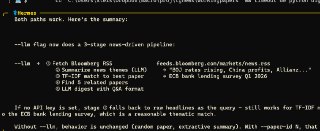
вторая попытка добавить глубины @workingpaper — вместе с потоком свежих рабочих бумаг появится записка с контекстом по центральным вопросам повестки
работает это примерно так:
(1) из rss Bloomberg + LLM получаем резюме повестки
(2) из базы рабочих бумаг находим наиболее связанные исследования - на скрине по tf-idf, в реальности по эмбедингам
(3) собираем их полные тексты и смотрим, что полезного они могут сказать по вопросу, на сколько оценки согласованы
работает это примерно так:
(1) из rss Bloomberg + LLM получаем резюме повестки
(2) из базы рабочих бумаг находим наиболее связанные исследования - на скрине по tf-idf, в реальности по эмбедингам
(3) собираем их полные тексты и смотрим, что полезного они могут сказать по вопросу, на сколько оценки согласованы
🔥
17
Пост от 13.05.2026 09:15
592
0
4
French Firms Overshoot Inflation Bets, Wage Spiral Fails to Materialize
• The main paper (Gautier et al. 2025) uses a unique Banque de France quarterly survey (2020–2024) to show that French firms initially underreacted to rising inflation, then persistently overshot expectations during disinflation, before re-anchoring to the ECB’s 2% target by late 2024.
• Critically, firms’ wage expectations remained subdued and tracked actual wage growth, not inflation expectations—especially long-term ones—implying limited pass-through and no wage-price spiral, consistent with short-lived wage contracts (Werning 2022).
• The related euro area paper (Baumann et al. 2025) corroborates the anchoring theme, finding that disinflation gradually pulls down firms’ expectations, but warns of potential scarring from high-inflation experiences—contrasting with the French paper’s optimistic re-anchoring narrative.
• The Bank of England paper (Yotzov et al.) adds a high-frequency dimension: UK firms react to CPI releases within hours, especially when media coverage is high, suggesting media attention amplifies the under/overreaction pattern seen in France.
• The Bank of Canada note (Asghar et al.) supports the French finding that elevated inflation expectations can influence price-setting, but warns this may delay monetary policy transmission—a nuance the French paper downplays given its benign wage outcome.
• The Banque de France NLP paper (De Bandt et al.) offers a complementary real-time indicator of inflation perceptions from press articles, aligning with the survey-based evidence and highlighting how media shapes the expectation formation process documented in the main study.
Cross-cutting themes: firms’ expectations are sticky, media-driven, and respond more to recent inflation than distant targets; wage pass-through is weaker than feared; and anchoring is resilient but not automatic. The overarching takeaway: despite initial overshooting and media amplification, firm-level inflation expectations in advanced economies have proven more anchored and less wage-contagious than policymakers feared, reducing the risk of a 1970s-style spiral.
————————————————————
Sources: MAIN: How French firms navigated the inflation surge: Lessons for expectations and dec… · R1: Inflation expectations and anchoring during a disinflation episode: Evidence for… · R2: Using the Press to Construct a New Indicator of Inflation Perceptions in France · R3: The speed of firm response to inflation · R4: Firms react more to recent inflation than expected future inflation · R5: Firms’ inflation expectations and price-setting behaviour in Canada: Evidence fr…
• The main paper (Gautier et al. 2025) uses a unique Banque de France quarterly survey (2020–2024) to show that French firms initially underreacted to rising inflation, then persistently overshot expectations during disinflation, before re-anchoring to the ECB’s 2% target by late 2024.
• Critically, firms’ wage expectations remained subdued and tracked actual wage growth, not inflation expectations—especially long-term ones—implying limited pass-through and no wage-price spiral, consistent with short-lived wage contracts (Werning 2022).
• The related euro area paper (Baumann et al. 2025) corroborates the anchoring theme, finding that disinflation gradually pulls down firms’ expectations, but warns of potential scarring from high-inflation experiences—contrasting with the French paper’s optimistic re-anchoring narrative.
• The Bank of England paper (Yotzov et al.) adds a high-frequency dimension: UK firms react to CPI releases within hours, especially when media coverage is high, suggesting media attention amplifies the under/overreaction pattern seen in France.
• The Bank of Canada note (Asghar et al.) supports the French finding that elevated inflation expectations can influence price-setting, but warns this may delay monetary policy transmission—a nuance the French paper downplays given its benign wage outcome.
• The Banque de France NLP paper (De Bandt et al.) offers a complementary real-time indicator of inflation perceptions from press articles, aligning with the survey-based evidence and highlighting how media shapes the expectation formation process documented in the main study.
Cross-cutting themes: firms’ expectations are sticky, media-driven, and respond more to recent inflation than distant targets; wage pass-through is weaker than feared; and anchoring is resilient but not automatic. The overarching takeaway: despite initial overshooting and media amplification, firm-level inflation expectations in advanced economies have proven more anchored and less wage-contagious than policymakers feared, reducing the risk of a 1970s-style spiral.
————————————————————
Sources: MAIN: How French firms navigated the inflation surge: Lessons for expectations and dec… · R1: Inflation expectations and anchoring during a disinflation episode: Evidence for… · R2: Using the Press to Construct a New Indicator of Inflation Perceptions in France · R3: The speed of firm response to inflation · R4: Firms react more to recent inflation than expected future inflation · R5: Firms’ inflation expectations and price-setting behaviour in Canada: Evidence fr…
🔥
3
Пост от 12.05.2026 18:43
1 705
1
34
ЧИСТЫЕ ПОКУПКИ ВАЛЮТЫ ФИЗЛИЦАМИ В АПРЕЛЕ ВЫРОСЛИ ДО 108 МЛРД РУБ ПРОТИВ 65,2 МЛРД РУБ В МАРТЕ – ЦБ РФ
ЧИСТЫЕ ПРОДАЖИ ВАЛЮТЫ НЕФИНАНСОВЫМИ КОМПАНИЯМИ РФ ВЫРОСЛИ В АПРЕЛЕ В 2 РАЗА К МАРТУ, ДО $29,8 МЛРД – ЦБ
ФИЗЛИЦА В АПРЕЛЕ СТАЛИ КРУПНЕЙШИМИ НЕТТО-ПОКУПАТЕЛЯМИ АКЦИЙ НА МОСБИРЖЕ, ПРИОБРЕЛИ ИХ НА 43,7 МЛРД РУБ - ЦБ РФ
КРУПНЕЙШИЕ ЭКСПОРТЕРЫ В АПРЕЛЕ НАРАСТИЛИ ПРОДАЖУ ВАЛЮТЫ ДО $7,3 МЛРД С $2,4 МЛРД В МАРТЕ - ДАННЫЕ ЦБ РФ
ЧИСТЫЕ ПРОДАЖИ ВАЛЮТЫ НЕФИНАНСОВЫМИ КОМПАНИЯМИ РФ ВЫРОСЛИ В АПРЕЛЕ В 2 РАЗА К МАРТУ, ДО $29,8 МЛРД – ЦБ
ФИЗЛИЦА В АПРЕЛЕ СТАЛИ КРУПНЕЙШИМИ НЕТТО-ПОКУПАТЕЛЯМИ АКЦИЙ НА МОСБИРЖЕ, ПРИОБРЕЛИ ИХ НА 43,7 МЛРД РУБ - ЦБ РФ
КРУПНЕЙШИЕ ЭКСПОРТЕРЫ В АПРЕЛЕ НАРАСТИЛИ ПРОДАЖУ ВАЛЮТЫ ДО $7,3 МЛРД С $2,4 МЛРД В МАРТЕ - ДАННЫЕ ЦБ РФ

😁
30
🔥
4
Пост от 12.05.2026 17:04
1 953
33
27
МИНЭКОНОМРАЗВИТИЯ ПОНИЗИЛО ПРОГНОЗ РОСТА ВВП РФ В 2026 Г. ДО 0,4%
МИНЭКОНОМРАЗВИТИЯ ПОВЫСИЛО ПРОГНОЗ ПО ИНФЛЯЦИИ В РФ В 2026Г ДО 5,2% С 4%, В 2027Г СОХРАНИЛО 4% - ПРЕДСТАВИТЕЛЬ МИНИСТЕРСТВА
МИНЭКОНОМРАЗВИТИЯ ПОНИЗИЛО ПРОГНОЗ СРЕДНЕГОДОВОГО КУРСА ДОЛЛАРА В 2026 Г. ДО 81,5 РУБ./$1 С 92,2 РУБ./$1
Релиз
Сценарные условия и сам прогноз
МИНЭКОНОМРАЗВИТИЯ ПОВЫСИЛО ПРОГНОЗ ПО ИНФЛЯЦИИ В РФ В 2026Г ДО 5,2% С 4%, В 2027Г СОХРАНИЛО 4% - ПРЕДСТАВИТЕЛЬ МИНИСТЕРСТВА
МИНЭКОНОМРАЗВИТИЯ ПОНИЗИЛО ПРОГНОЗ СРЕДНЕГОДОВОГО КУРСА ДОЛЛАРА В 2026 Г. ДО 81,5 РУБ./$1 С 92,2 РУБ./$1
Релиз
Сценарные условия и сам прогноз

🔥
20
😁
4
🤬
1
🫡
1
Пост от 11.05.2026 18:35
2 192
6
11
мы построили новый уникальный классификатор доступный в онлайн приложении
--
живая ссылка: https://t.me/c0ldness/7283?comment=310702
--
живая ссылка: https://t.me/c0ldness/7283?comment=310702
😁
34
Пост от 11.05.2026 18:24
2 180
5
7
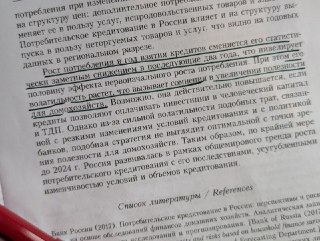
потребительские кредиты финансируют потребление
-- исследователи
-- исследователи
🫡
24
😁
9